Opus 5.5 prompts for video, with what each one made
Each Opus 5.5 prompt here is shown with the video its author made and a note on why it works. Pick one, load it into the generator and swap in your own product.
New video: 10 credits · Change: 5 creditsOpening soon
An independent tool built on Claude Opus 5.5. Not affiliated with Anthropic.
Opus 5.5 prompts by style
Community videos were made by their creators in Claude Code and other tools, often with reference files, sound and longer runtimes. The same prompt here gives a shorter, silent canvas video.
Launch videos
Launch video
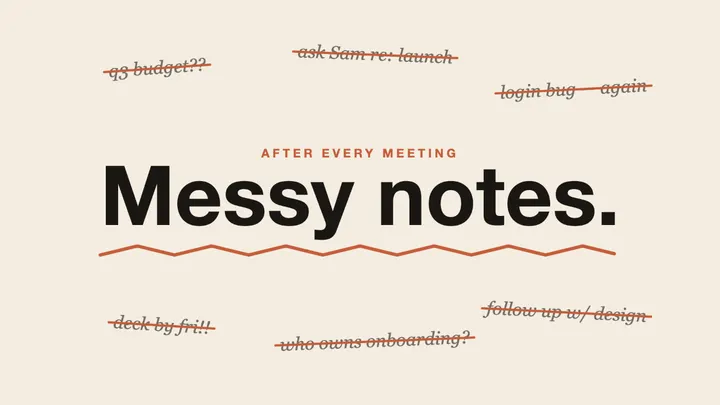
Notes app launch
Made on this site
Why it works: A plain product brief: name, three features, a tagline and a palette. This is the level of detail the generator here works best with.
Prompt: Inkwell — a notes app that turns messy meeting notes into clear action items. Features: one-tap summaries, shared team spaces, works offline. Tagline: Think clearly, ship faster. Use a warm ivory, near-black and terracotta palette.
Why it works: Asks the model to research a real SaaS and gather its assets first. That needs web access, which the generator here does not have.
Prompt: I want you to create a highly professional SaaS product launch video. Go and find some SaaS, preferably just one that people know, so it's easier to identify with it. Pick that, and then make sure to get actual assets and images and all of that stuff from the internet. Turn it into these typical, very professionally edited, motion-graphics-styled product launch videos that you see people making on Twitter when they launch new SaaS products (which are showing off the features, the benefits, and all of these things).
Why it works: Names the project and quotes its one-line pitch, which becomes the headline of the video.
Prompt: Make a dynamic 20-second motion graphics launch video for my open-source project jev-browser-skill ('Give a site. Write a goal. Jev clicks.'), like it's the hero video on its GitHub README. Go all out.
Why it works: The prompt that started the trend: a length, a format and a reason to show off.
Prompt: make a dynamic 15-second motion graphics video that shows what an incredible motion designer you are, like it's your showreel for a résumé. go all out.
Why it works: The showreel prompt with one added word of style. A single adjective changes the whole look.
Prompt: make a dynamic 20-second motion graphics video that shows what an incredible motion designer you are, psychedelic and hypnotic. make it feel like a showreel piece. go all out.
Why it works: A longer rewrite of the showreel idea that spells out pacing and confidence.
Prompt: You're a world-class motion designer, and this is your 15-second résumé reel. Make it dynamic and confident: open with a striking hook in the first second, build through a sequence of distinct techniques (typography, shape play, camera moves, colour shifts), and land on a clean, memorable final frame. Pacing should feel like it's cut to music. Go crazy.
Make it promote our brand, reflex. inc. Proceed as if you were starting with zero of my tools. Do not assume that the tools we already have are the best to use, as they might be outdated.
Why it works: Names the toolchain (Python) and the format (9:16), then asks for chaos on purpose.
Prompt: Use Python to generate a 9:16 chaotic brain rot video with excellent motion + sound design and render it using ffmpeg. Put your own personal spin on it so it’s aligned with Anthropic’s new launch. Also fully express what it’s like to be a very creative LLM used by me every day from your POV to give it some extra personality.
Why it works: Describes the reveal step by step: wireframe first, then the pieces fly in. Sequence is the brief.
Prompt: Create a motion design video of a slow-reveal transition. Draw the logo as a wireframe first, then fly in faceted low-poly shards one by one until they assemble the logo. Finish by bringing in the app icon background and typing out the brand name.
Why it works: Gives the exact line to animate. When the copy is fixed, the model spends its effort on motion.
Prompt: make a 20-second motion graphics manifesto for DreamFort: "superintelligence should belong to everyone". every frame and every sound written in code, no image or video models.
Explainers
Explainer
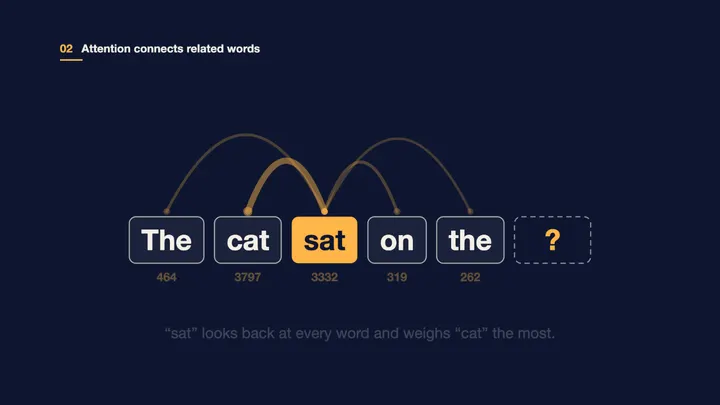
How a transformer reads a sentence
Made on this site
Why it works: Names the three things to show in order, so the explainer has a beginning, middle and end.
Prompt: A short explainer: how a transformer reads a sentence. Show tokens appearing, attention lines connecting related words, and the next word being predicted. Calm, educational tone. End card: Attention is all you need.
Why it works: Framed as a test (“do you think you could…”) and specific about the subject: a recipe, step by step.
Prompt: We're going to try a little test. Do you think you could render a recipe motion graphic animation using javascript or html (w/e you think will produce the best) to show the full recipe from start to finish (empty glass to completed cocktail) - Explainer video style - Showing the recipe ingreidents + measurements as they're going into the cup. Should be a 30s video.
Why it works: One idea with a built-in twist: every explanation of recursion uses a different visual style.
Prompt: A video explaining recursion, where every explanation about recursion has a radically different video style, make this self-referential & clever & fast moving.
Why it works: Picks a style (hand-drawn whiteboard) and a hard topic, and lets the model plan the lesson.
Prompt: Do a quick hand-drawn whiteboard animations explaining what is replica symmetry breaking in the SK model Prompt 2: build the mp4 version with narration
Why it works: A role, a length and a structure for a business explainer in one paragraph.
Prompt: Adopt the role of an expert motion designer. Build a 30-second animated explainer for my business as a single HTML page. 5 scenes. The customer's problem, what I do, how it works in 3 steps, one proof point, and my name at the end. Bold text, smooth transitions, my brand colours. My business [DESCRIBE WHAT YOU SELL, WHO IT'S FOR AND YOUR COLOURS]
Why it works: A timeline brief: a date range and the things to plot on it.
Prompt: Can you make me a video of LLM progression, like models that is from January of this year up until now, and what the trajectory is looking like, the capabilities and models as well? Like the capabilities of models too? I want to make it really like bang, bang, boom, whoa, here we go, kind of amazing innovation. Are you ready for this kind of thing? I think you'd use vMotion, 3GS, a bunch of stuff you've got. Use whatever you want.
Hand-drawn animation
Hand-drawn
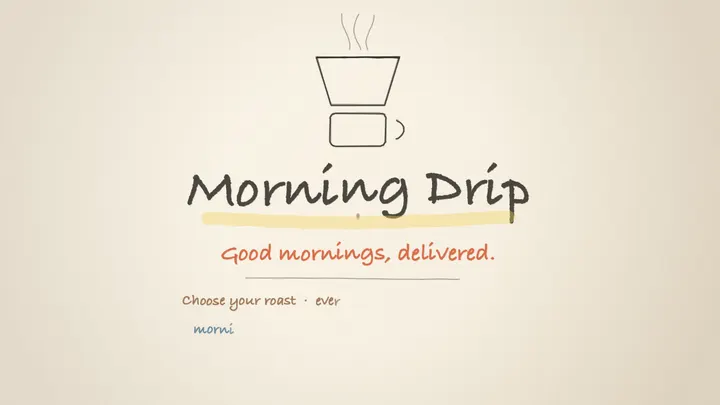
Coffee subscription, hand-drawn
Made on this site
Why it works: The same structure as a launch brief, run through the Sketch style to get ink lines on paper.
Prompt: Morning Drip — a neighbourhood coffee subscription. Freshly roasted beans delivered every two weeks, choose your roast, pause anytime. Tagline: Good mornings, delivered.
Hand-drawn
Tea shop opening, from a Chinese brief
Made on this site
Why it works: Written in Chinese; the on-screen copy comes out in Chinese too.
Why it works: Sets a material (origami, doodle) and a sweeping subject, and asks for a short film.
Prompt: Create a short origami / doodle-style animation showing humanity’s development, progress, and civilization from birth to the present, and ultimately the hatching of AI. AI then gradually develops and advances, eventually hatching today’s Opus 5.5 (you). Style: doodly, cute, warm, strongly narrative, no spoken language (simple text is OK, but don’t use too much explanatory/narrative text, because I want different civilizations to be able to understand it), poetic, moving, high quality.
Why it works: A long, careful brief for a greeting video in a hand-drawn canvas style.
Prompt: I want you to create a "Happy Mid-Autumn Festival" video in hand drawn canvas animation style. You must use the attached Taiwan black bear as the main character representing Taiwan: flat black silhouette, round ears with grey insides, big round white-ringed eyes, white round muzzle with a small black nose and smile, and the white V moon mark on its chest. Keep it recognizable as that exact character. The character will have adventures, fast cuts, zooms, animations going all out in the hand drawn style. But WOW the audience and research how Taiwan celebrates Mid-Autumn to include in this video: outdoor barbecue with family and friends over the long weekend (a tradition born from a 1980s soy sauce ad), sharing mooncakes, pomelo rind hats, and moon gazing. Make it unconventional, showing the true spirit of a Taiwanese Mid-Autumn night. Use a Taiwanese style font, make it almost Taiwan black bear branding.
if there is any text , write in traditional chinese and english
Get the right assets, plan it out, draft and render to give me an MP4. No skills, No MCP. 16:9 at high res, 30 seconds max, aim to reduce file size limit
Why it works: Specifies format, ratio and a craft tradition: paper cut-out shadow theatre, vertical, with gentle sound.
Prompt: Create a pure javascript animation. 30-60s, vertical 9:16, paper cut-out shadow theatre style with gentle, fitting audio (made in code) on the topic: What makes a place feel like home?
Why it works: Lists the steps to show, so the drawing-style clip follows a real user flow.
Prompt: build me a 30s drawing style animated clip about submitting a product to AppSumo via your agent. steps are: 1. connect your agent 2. your agent fills out your listing and sets up redemption 3. go live!
Why it works: A historical brief with a date, a place and a time of day. The original is a 3D scene, which this generator does not build.
Prompt: Recreate Market Street, San Francisco as it stood on April 17, 1906, the afternoon before the earthquake, in Blender.
Scope: the Ferry Building up Market to Fifth Street, including the Palace Hotel, the Call Building, the Chronicle Building, Lotta's Fountain and the Emporium.
Before modeling anything, build a source file from: the 1899-1905 Sanborn fire insurance maps (footprints, heights, materials, occupants), the Miles Brothers film "A Trip Down Market Street" (April 1906), period photographs from OpenSFHistory, the Library of Congress and the David Rumsey collection, and USGS topography. Record every building with footprint, height, facade material, occupant, and the source for each fact with a confidence level.
Build everything in Blender Python. No downloaded meshes, textures or HDRIs. Write reusable generators (Victorian commercial facade, mansard roof, bay windows, awnings, painted signage, gas and electric street lamps, cable car, horse-drawn wagon, early automobile) and assemble the street from the source file, so every building traces back to data.
Provide a 10 second video up the street.
Why it works: A medium (sand animation), a span of history and a tone. At two minutes it is far longer than the videos made here.
Prompt: Make a 2-minute sand animation that tells the story of 250 years of U.S. history. Keep it lively, engaging, and tasteful. Add appropriate background music and sound design.
Why it works: A place, an art style and one mechanic: the scene changes with the time of day.
Prompt: Create a stylistic 3D environment of a busy Santa Monica beach that adapts to the time of day. The art style must be a particle illustration, which uses thousands of tiny glowing specks rather than solid fills with flowing ribbon strokes behind figures to suggest motion.
I had 2-3 more prompts on top of this, but this is a good starting point.
Repo link: https://github.com/ishuagrawal/particle-beach
Why it works: Combines a maths subject with a craft look: fractals that seem handmade.
Prompt: build an art project which is a fractal visulizer (mandelbrot, etc), but the styles look like handcrafted with paper, cardboard and such. Add post-procesing so it looks cinematic. Also want to use beautitful elaborated animations and transitions and a beautiful UX. Plan it first, show me a preview before coding everything
Why it works: Fixes the technical frame first: one HTML file, WebGL2, no libraries, eighty seconds, square.
Prompt: Make an 80 second square animated film as a single HTML file, using WebGL2 and plain JavaScript, with no libraries and no image, font or audio files. It should look like a glass and gold leaf wall mosaic whose tiles were never glued down, so they can lift, flip, fly and click back into place. Figures are flocks of tiles, so a fish swims by its tiles swimming.
Why it works: One character, one spot, plain JavaScript. A narrow brief that shows off animation skill.
Prompt: make a samurai dude in only javascript and have him doing a routine in a single spot going through various seriously impressive poses and motions and positions in a fiery awesome display
Why it works: Asks for a process, not a picture: paint a known image stroke by stroke.
Prompt: can you search for the picture of Mona Lisa, then replicate it using mouse movement and brushes in JS paint using chrome? Follow-up: Ok now can you make a video of exactly what you just did? Showing every mouse movement and changes?
Community videos belong to their creators and are shown as short previews with a link to the original post. If one is yours and you would like it changed or removed, email support@opus55video.org.
How to write an Opus 5.5 prompt that works
The prompts above look casual, but the ones that produce good video share the same four ingredients. Use them as a checklist before you press generate.
Name the format and the length
“A 12-second motion graphics video” gives Opus 5.5 a pace to plan against. Without a length it tends to write one slow scene.
Give it real material
A product name, three features and a tagline beat any adjective. If you paste a URL here, the page title, description and headings become that material.
Ask for a point of view
The best-known Opus 5.5 prompt asks it to make a showreel “like it’s your résumé”. A role and a reason raise the ambition of the result.
Say what must stay out
“No border text”, “no stock icons”, “two colours only”. Constraints are easier for the model to follow than taste.
What changes when you run an Opus 5.5 prompt on this site
Most community videos were made in Claude Code over several turns, with tools this generator does not have. The same Opus 5.5 prompt will give a different result here, and it is better to know why before you spend a credit.
One canvas, no outside files
Videos here are a single canvas animation with no images, fonts or libraries loaded from elsewhere. Prompts that rely on Three.js, GSAP or uploaded assets are reinterpreted in plain canvas.
Short by design
A video runs 8 to 14 seconds. A prompt asking for two minutes is condensed to its strongest beats.
No sound yet
Several prompts above ask for a soundtrack. This generator makes silent video; add audio in your editor afterwards.
One pass, then edits
You get one generation, then you change it by chat. Asking for a bigger headline or a different ending costs half a new video.
Opus 5.5 prompt FAQ
What is the best-known Opus 5.5 prompt for video?
“Make a dynamic 15-second motion graphics video that shows what an incredible motion designer you are, like it’s your showreel for a résumé. Go all out.” It spread on X in the week Opus 5.5 launched, and many of the showreel examples above start from it.
Can I use these prompts as they are?
Yes for trying things out. For your own video, replace the product, the features and the palette, because a prompt written for someone else’s brand produces their video, not yours.
Do I need Claude Code to run an Opus 5.5 prompt?
No. The generator on this page sends your prompt to Claude Opus 5.5 and renders the result in your browser. Claude Code is only needed for the longer, multi-file projects some creators built.
How long should a prompt be?
Two to five sentences is enough: the format and length, what the product is, three things to show and any constraint. Very long prompts mostly help when you are supplying facts, not style notes.
Where do these prompts come from?
From posts their authors shared publicly on X, collected in open community lists. Each card links to the original post, and the prompt text belongs to the person who wrote it.
 Launch video